
The Wohl degradation cleaves the C1–C2 bond of an aldose chain, shortening it by one carbon. Like in the Kiliani–Fischer synthesis, the transformation relies on first converting the aldehyde group to a cyanohydrin.
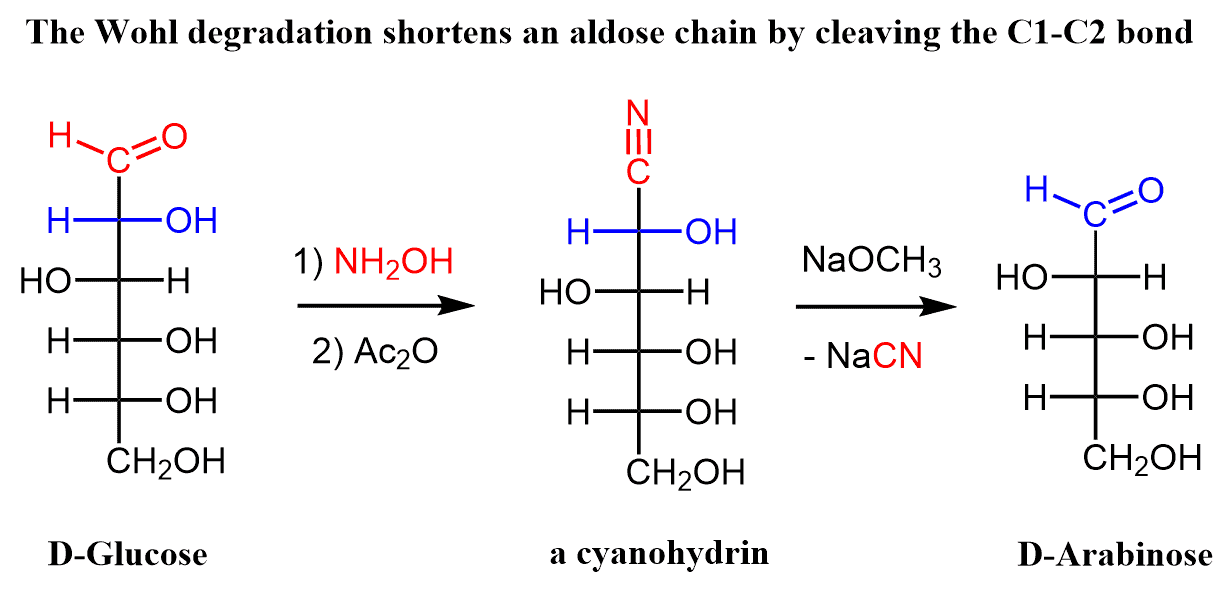
Notice, however, the key difference: the (red) carbon atom of the cyanohydrin group, which is cleaved in the next step, comes from the aldehyde rather than the -CN ion, as in the Kiliani–Fischer synthesis. Recall that the Kiliani–Fischer synthesis was used to increase the carbon chain by a nucleophilic addition of a cyanide:
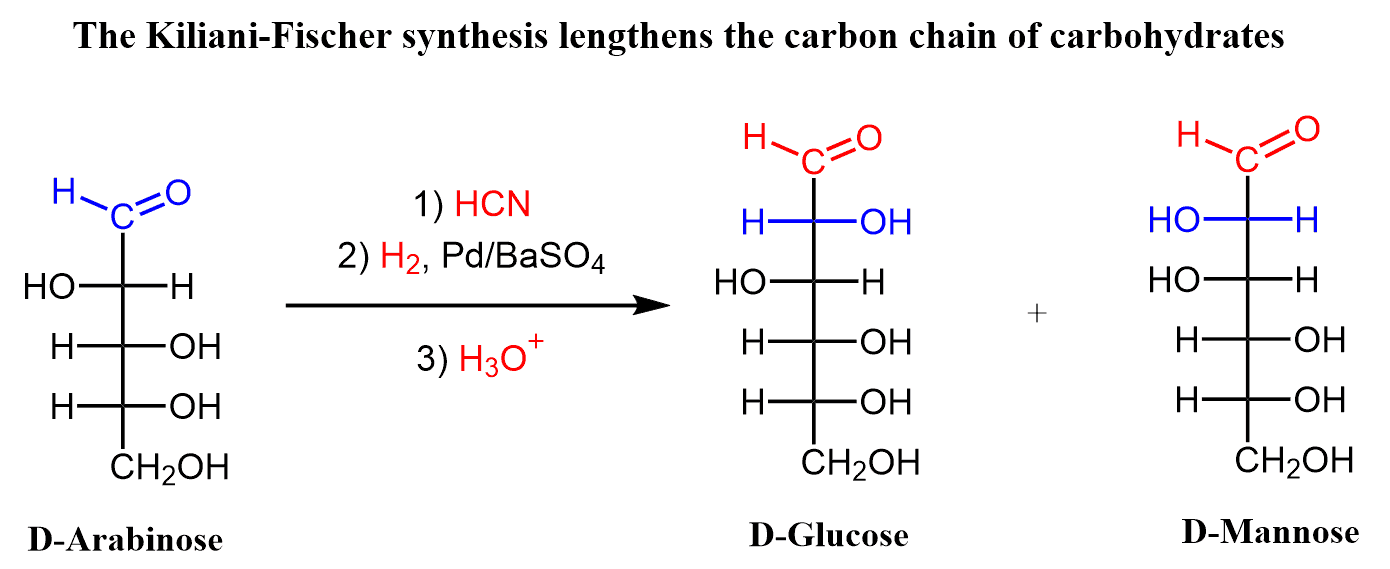
So, these two reactions are reverse processes if we compare the net transformations, even though the mechanisms are different.
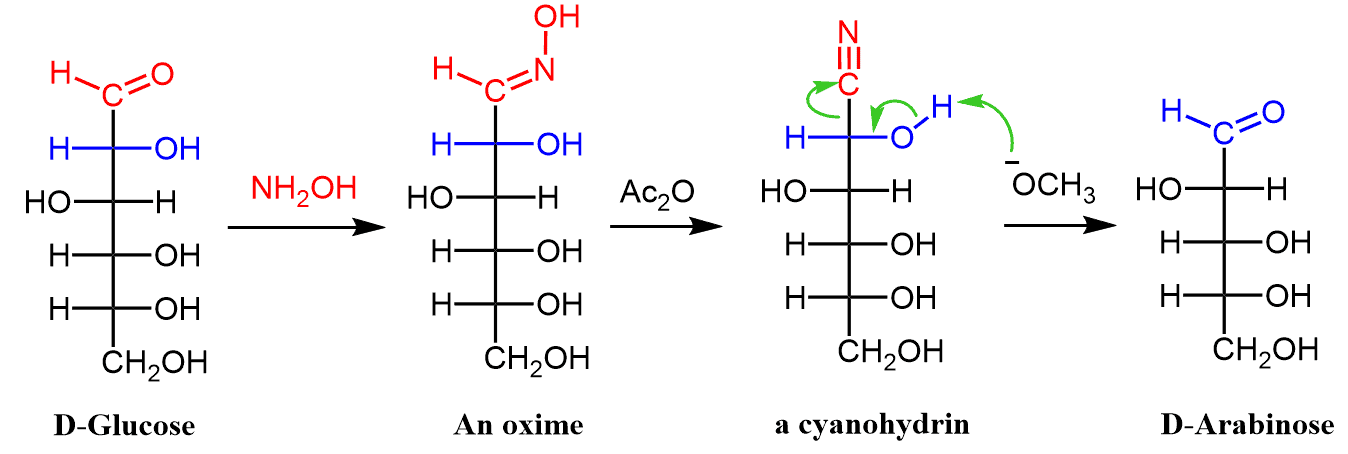
So, let’s discuss the mechanism of Wolf degradation in more detail. The aldehyde is converted into a cyanohydrin via oxime formation, as we have seen in the reaction of aldehydes.
Dehydration of the oxime by acetic anhydride produces a cyanohydrin, which is kicked out by a strong base, forming the new carbohydrate with one less carbon atom:
Another strategy for shortening the length of the carbohydrate chain is the Ruff degradation, which uses Fe2+ ion and peroxide to achieve an oxidation followed by decarboxylation:
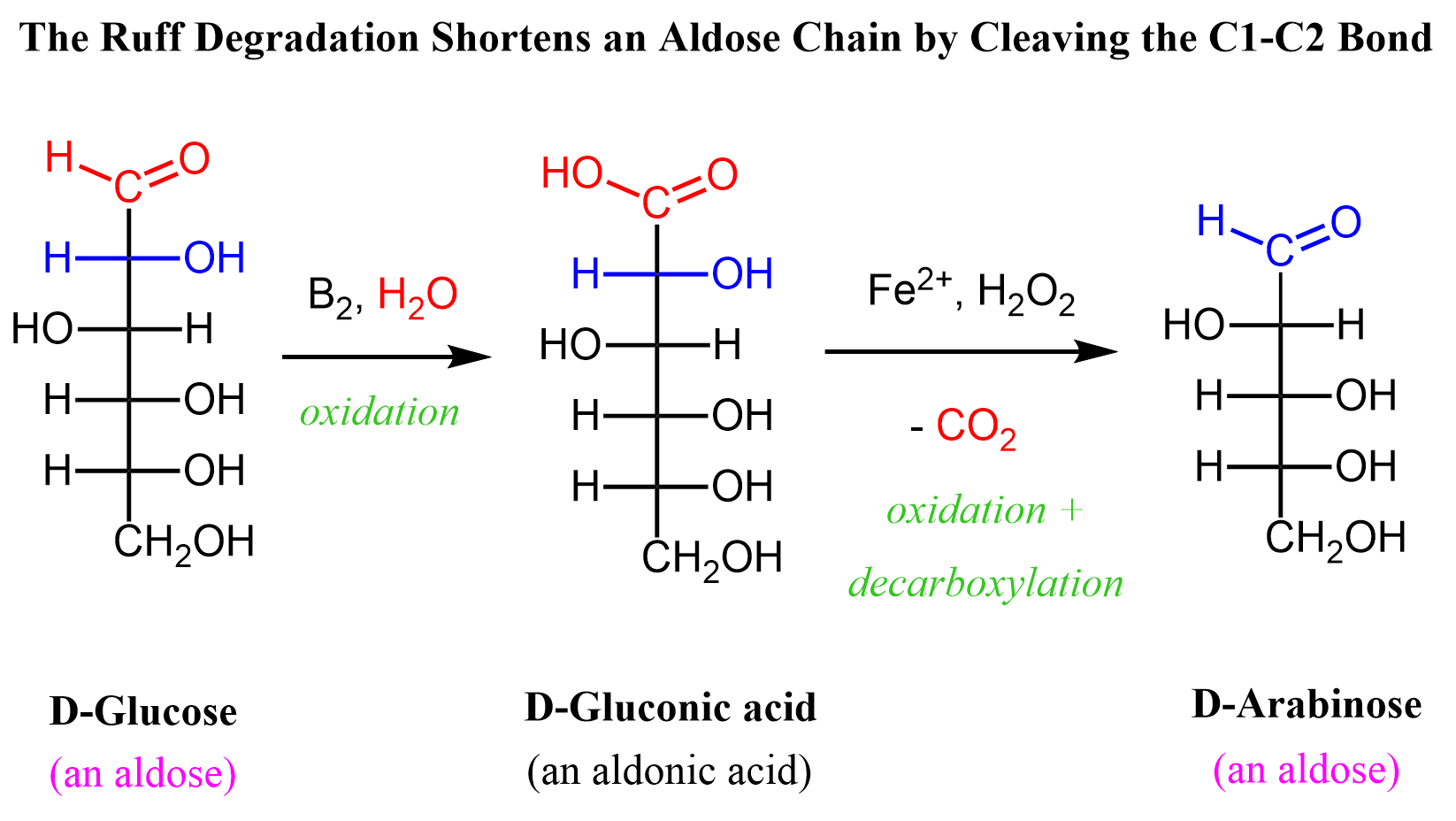
You can check this post dedicated to the Ruff degradation, where we cover the mechanisms for all the steps in this conversion.
Need some practice on carbohydrates?
Check this Multiple-Choice, summary quiz on the structure and reactions of carbohydrates with a 40-min video solution!

Carbohydrates Practice Problem Quiz
Check Also
- Carbohydrates – Structure and Classification
- Erythro and Threo
- D and L Sugars
- Aldoses and Ketoses: Classification and Stereochemistry
- Epimers and Anomers
- Converting Fischer, Haworth, and Chair forms of Carbohydrates
- Mutarotation
- Glycosides
- Isomerization of Carbohydrates
- Ether and Ester Derivatives of Carbohydrates
- Oxidation of Monosaccharides
- Reduction of Monosaccharides
- Kiliani–Fischer Synthesis
- Wohl Degradation
Hi, in the last reaction mechanism, glucose oxime is missing an oxygen atom on nitrogen.
Thanks for spotting that! Fixed.